
Rapid prototyping
A prototype in your hand tells you more than a model on screen. We print version after version until the part fits and works, then make the same part in a batch.
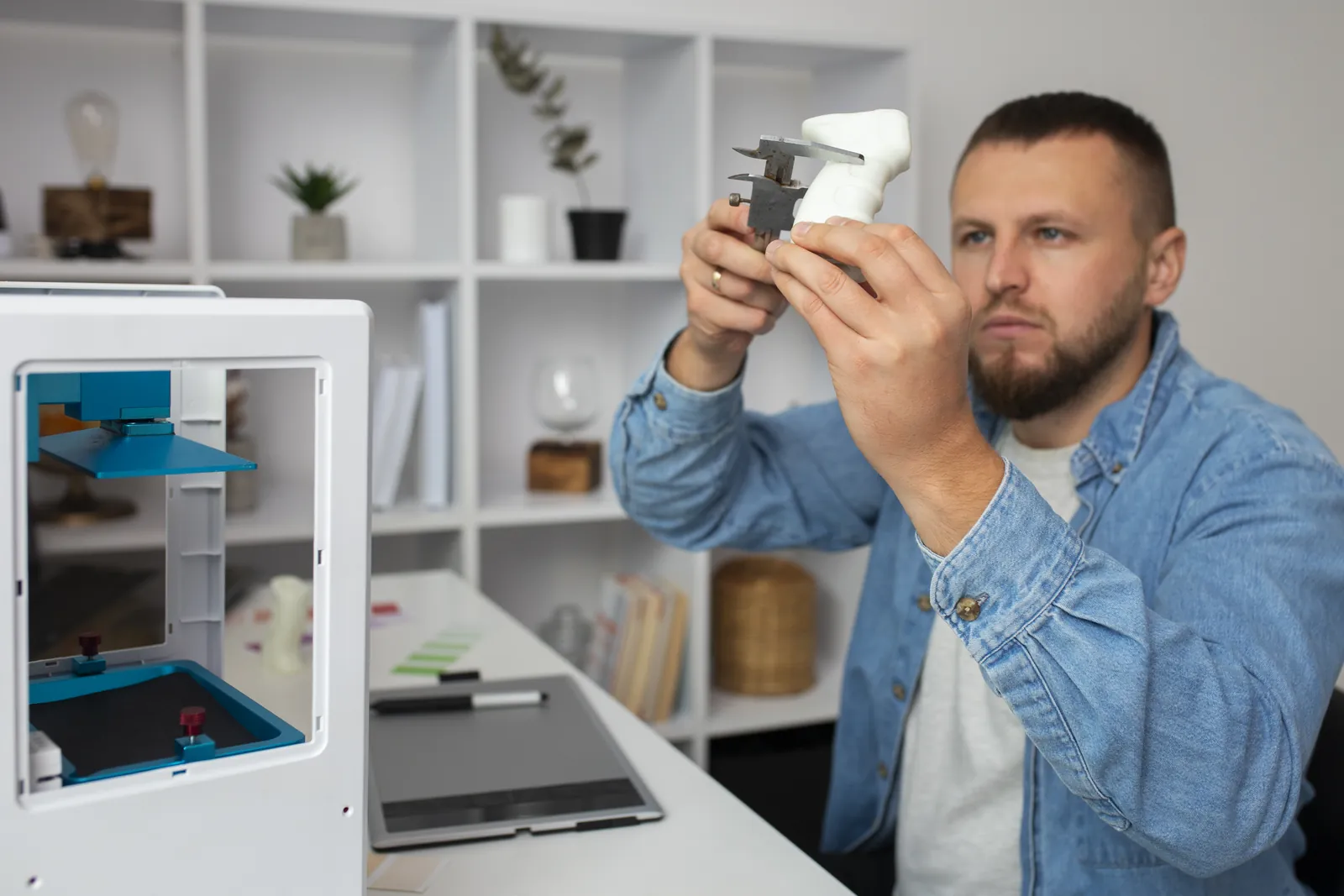
What a prototype is for
- Checking fit: whether parts go together and the holes line up with the screws.
- Functional tests: whether the mechanism moves and the bracket carries its load.
- A display model for a client, an investor or a trade fair.
Which prototype you need
| Prototype | What it checks | Material |
|---|---|---|
| Visual | shape, proportions, ergonomics, feel in the hand | PLA: accurate and inexpensive |
| Functional | fit, assembly, how a mechanism works, load | PETG or the target material |
| Pre-production | dimensions and appearance under batch conditions, sign-off before the run | the batch material and settings |
Clearances in a printed prototype
| Joint | Clearance on diameter or width | Note |
|---|---|---|
| Shaft turning in a hole | 0.3–0.4 mm | print the hole vertically, it comes out roundest |
| Sliding parts | 0.3–0.5 mm | run guides along the layers, they bind less |
| Light press fit | 0.1–0.15 mm | for dowel pins and plugs |
| Screw in a clearance hole | 0.3 mm | M3 in a 3.3 mm hole, M4 in 4.3 mm |
| Two printed parts meeting | 0.2 mm per side | covers and enclosures built from several parts |
How many versions it usually takes
Simple brackets and covers usually need one version, sometimes two: the first shows whether the part fits, the second refines the details. Enclosures with snap fits and mechanisms with moving parts typically go through three to five iterations before they are ready for a batch.
To shorten the loop we often print two variants of the first version side by side, for example with different clearance on a snap hook. You compare them in your hand and know straight away which way to go, instead of waiting for another round.
A prototype in the target material
A PLA prototype answers whether the part looks right and fits. Whether it will last is only answered by a prototype in the plastic the batch will use. A PETG snap fit flexes differently from a PLA one, and an ABS bracket copes with heat differently.
For functional parts we therefore suggest two steps: a quick PLA version to settle the shape, then one or two versions in the target material for tests in real conditions. The last of them becomes the reference sample for the batch.
From prototype to batch
- You upload a model or send a sketch with dimensions.
- We print the first version and point out features worth changing for printing.
- Once you approve a version, its print profile is saved.
- The batch runs with that profile on identical printers, and so does every repeat order.
Your designs stay confidential
Prototypes are often products before launch. We use your files only to quote and print them and pass them to no one. On request we sign a non-disclosure agreement before you send any documentation.
Common questions
Can I order several variants at once?
Yes. Upload all the variants in one order. The production setup is charged once and you can compare the versions side by side.
I only have an idea, not a 3D model. What now?
Send a description and a sketch with dimensions through the enquiry form. We start by agreeing what the prototype has to prove, because that decides the material and how it is printed.
Which material should a prototype be printed in?
It depends on what the prototype has to check. PLA is enough to judge shape, proportions and ergonomics. If the prototype goes through functional tests such as fit, assembly or load, print it in the target material, usually PETG, so it behaves like the later production part.
Related
Batch 3D printing
Low-volume production without a mould: repeatable parts in dozens and hundreds.
3D printing materials compared
FDM plastics compared: PETG and PLA as standard, ABS, ASA, TPU and nylon on request.
3D printing quote
Upload a model and see a guide price for your material and quantity at once.
A file or just an idea? Either is enough to start.
Upload a model and see a guide price straight away, or tell us what you need. Written enquiries get a specific quote in reply.